
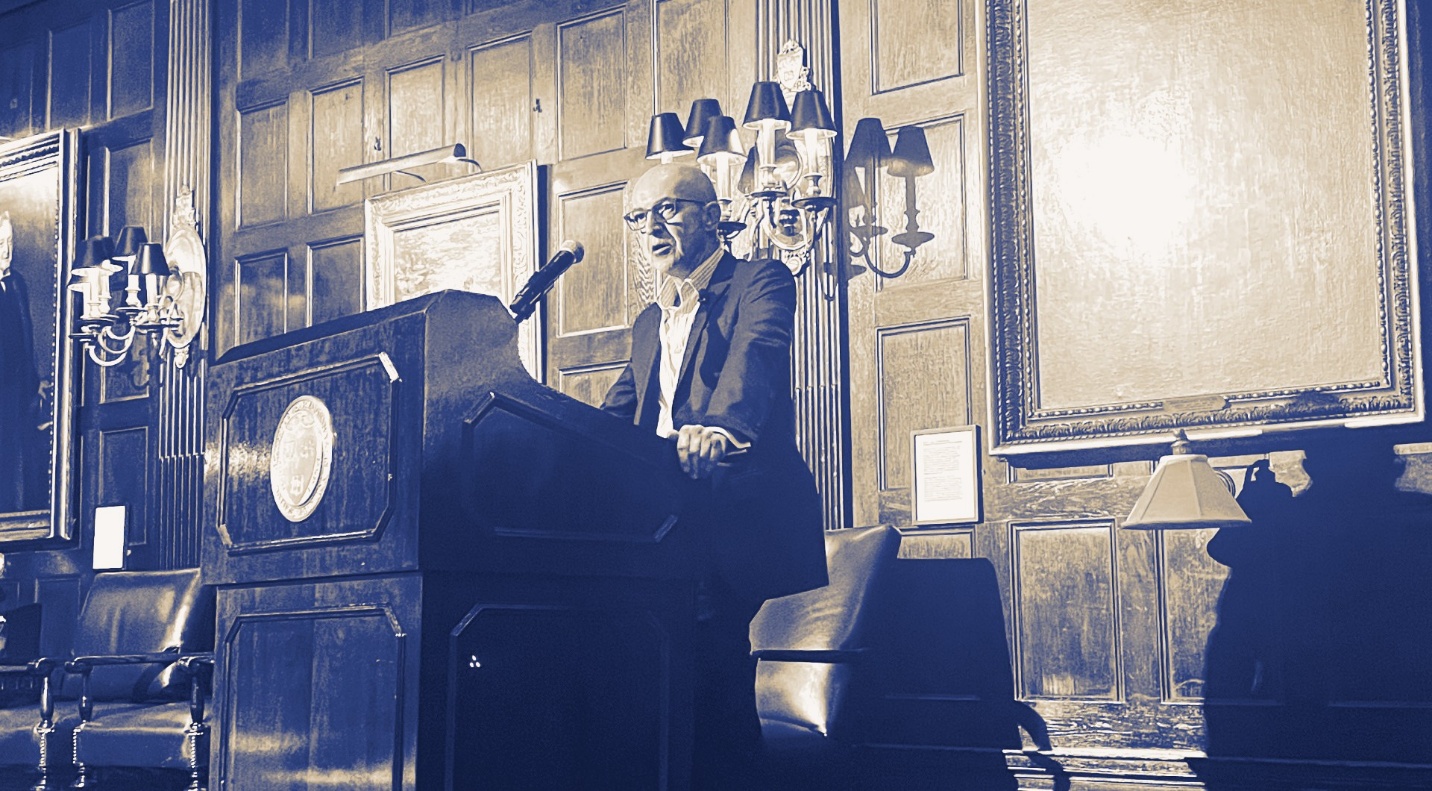
The fifth New Approaches Summit, held at the Harvard Club of New York on September 25, brought together regulators, researchers, manufacturers and investors working on tobacco harm reduction (THR): moving people who smoke onto less harmful sources of nicotine. Pieter Vorster, Hexis's founder and chief executive, gave an address on active engagement and joined the closing panel on misinformation and capital. For us, the most important remarks came from Dr Bret Koplow, recently confirmed as director of the Food and Drug Administration's Center for Tobacco Products (CTP). He expressed a willingness to address two critical issues: misperceptions about relative risk, and a product authorization process so dysfunctional that it has left much of the market for reduced-risk tobacco and nicotine products effectively unregulated.
The FDA intends to help correct misperceptions
Dr Koplow set out CTP's four priorities: preventing youth initiation, especially of cigarettes; helping people who smoke to stop, or to switch completely to reduced-risk products; making sure consumers and clinicians have accurate information on relative risks; and removing non-compliant products from the market. All four clearly matter, but the third and fourth seem to us to mark a change of emphasis.
Dr Koplow called healthcare providers' misunderstanding of nicotine a big missed opportunity, and said he was encouraged by the recent recommendations in the Journal of the American Medical Association (JAMA) that clinicians offer vaping products to patients trying to quit, which we wrote about earlier this month. Those recommendations also highlighted how widespread the problem is: many clinicians, and much of the public, now believe e-cigarettes are as harmful as cigarettes or worse. CTP is expanding its communication on relative risks and testing messages for unintended consequences. "So far it's mostly been me talking about it," he said, "but we're going to be doing things about it."
A more pragmatic regulator
Every new nicotine product sold in the US needs FDA marketing authorization, usually through a premarket tobacco product application (PMTA). Dr Koplow said the value of those authorizations is undermined when so much of the market is unauthorized, citing the estimate, also noted in our JAMA post, that nearly 70% of e-cigarette products sold through US grocery and convenience stores were unauthorized at the end of 2025. Building consumer preference for authorized products, he argued, matters as much as the authorizations themselves.
The fourth priority, removing non-compliant products, connects several of the day's sessions. Lillian Ortega of WOW Solutions explained the FDA's proposed registration and listing rule, which would extend to foreign manufacturers the reporting domestic firms already do, so that the agency can identify products before they reach store shelves. Ao Weinuo, secretary-general of the China Electronics Chamber of Commerce, described a Chinese vape industry regulated since 2022, with stronger enforcement, consolidation and better quality. Together with faster reviews and improved and targeted US enforcement, these changes could eventually move more of the US market back to authorized products.
Not everyone welcomes the agency's direction. In July the Campaign for Tobacco-Free Kids, the American Academy of Pediatrics, the American Heart Association and others sued the FDA over its May 2026 enforcement guidance, which they say "permits potentially thousands of tobacco products to enter and remain on the market" without authorization.
Even so, CTP appears willing to be more pragmatic. It cut its backlog of pending applications by about 70% in 2025, and there is no longer a queue at the first stage of review. Reviewers now raise gaps in the data while the scientific review is under way, rather than sending a full list at the end. Dr Koplow appeared willing to consider product standards, which wouldn't remove the need to review each PMTA individually (as the statute requires), but could standardize and simplify the process. Taken together, these steps suggest a regulator willing to work with industry. "We're committed to doing our part," Dr Koplow said, "and I look forward to doing it with you."
Shifting the focus back to adults who smoke
Dr Annie Kleykamp of the University of Maryland School of Medicine, one of the authors of the JAMA recommendations, pointed to an imbalance: the Tobacco Control Act, CTP, the loudest lobbying groups and much academic research all focus on youth, and no comparable effort serves older people who smoke. Smoking prevalence among older Americans is broadly stable, so their number is rising as that population grows, and by 2034 Americans over 65 are projected to outnumber those under 18.
Clinicians could help this group sooner than any change in policy. Dr Edward Anselm of the Icahn School of Medicine at Mount Sinai described how poorly the medical profession performs on cessation, in contrast with diabetes, where it has done a much better job. Low reimbursement is part of the reason; the misperceptions about nicotine that the JAMA recommendations set out to correct are, in our view, another.
Misinformation reaches investors too
Our own contribution introduced the key Hexis theme that shareholders can speed the move away from cigarettes by owning companies and pressing their boards for specific, dated commitments, rather than by excluding the sector. We also reported a live poll of US financial professionals on a September 1 webcast: 51% said vaping was about as harmful as smoking or more so, and 7% said it was much less harmful. The misperceptions Dr Koplow described appear to extend to the people who price these companies, so steps by the FDA to improve understanding of relative risk could also improve investors' understanding of the transition, and their interest in it.
Dr Derek Yach, Chair of the Hexis Harm Reduction Stewardship Council, has also written up his thoughts from the day, noting in particular that the Summit was dedicated to the memory of Scott Ballin, a giant in the field of tobacco and public health: Dialogue Matters: What I Heard at New Approaches 2026